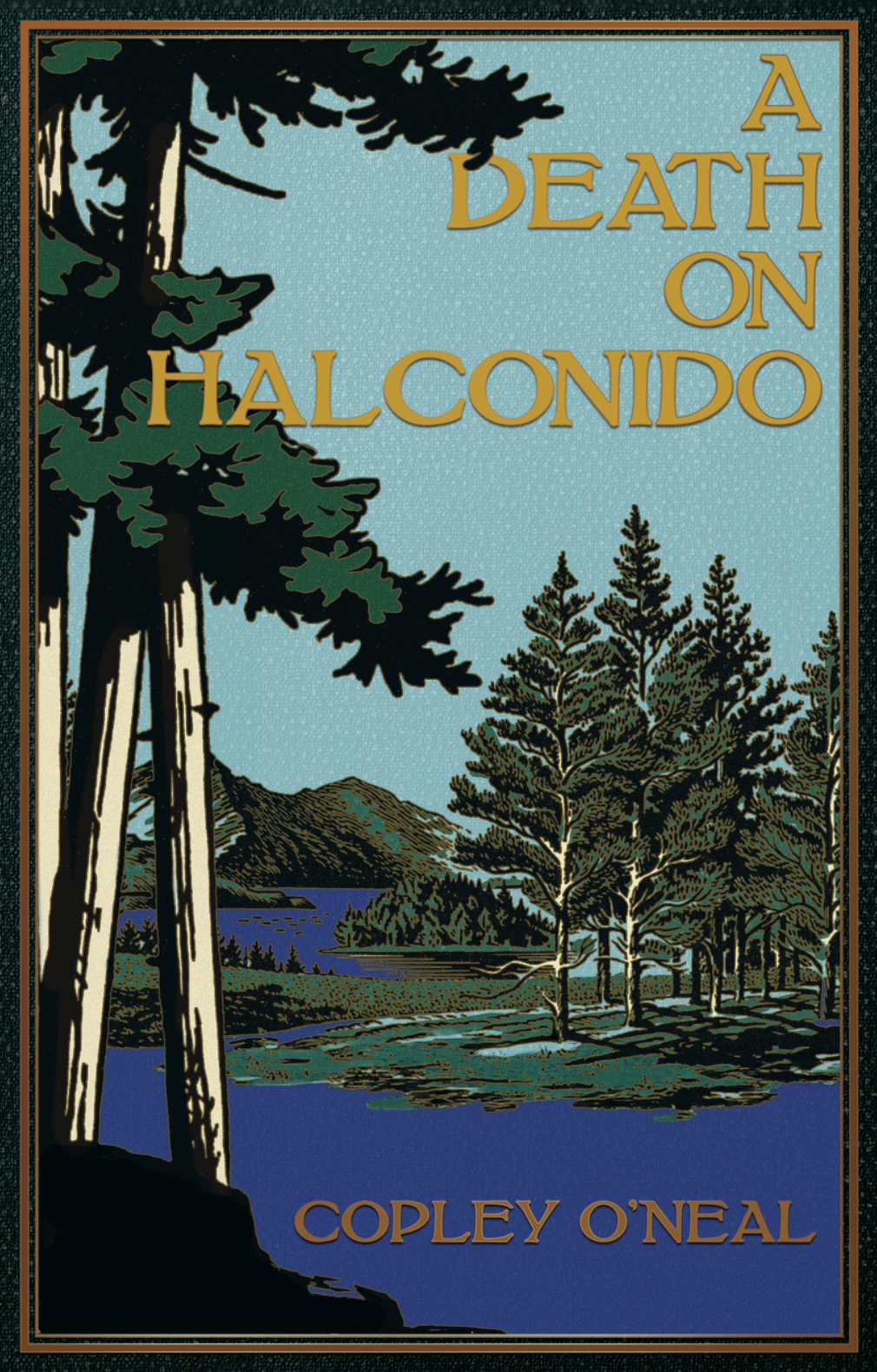
A Death on Halconido
The early evening of Saturday, April 22, the day that the accomplished ornithologist, Brandt Holme, will die, the dusk is cloudless sheets of magenta. It's a stunning evening in the mountain town he calls home, though Brandt is not attentive to any beauty except to observe that his two gorgeous birds — one the high-altitude specialist, a Black Rosy-Finch (Leucosticte atrata 502) and the other a brilliant blue migratory songbird Indigo Bunting (Passerina cyanea 506) — require a few clicks more on the thermal dial of his custom brooder, an incubator referred to as the Holme Roost. These are not hatchlings, however. To be more precise — and Brandt is always precise — samples 502 and 506 are classified adolescent, teen birds with teenage temperaments: impulsive, adventurous. Despite this, Brandt is not concerned that his birds will misbehave on their trip. He knows how to handle any passeriform at any stage.
"You are about to embark on the flight of your lives," he says. "If only you could appreciate what is ahead." He is oblivious to anything but the two birds in front of him.
He turns up the heat on the Roost and checks the solution of sugar water and vitamins — his patented formula. He adds straw to busy them, because keeping birds occupied with little tasks will distract them, and he needs them to arrive at their destination in a healthy state. Though it is true that museums typically house dead specimens, it is important that the birds at least arrive as is, and after all, what will later become of these samples is out of his hands. All he needs now is for Drs. Eben, Lennox, and Alderman to quietly acknowledge that these birds had been, indeed, live specimens when he caught them in their wild state. Appearances will go a long way to demonstrate his unquestionable fitness for the job. Brandt smiles a toothy smile at this thought, and perhaps in recognition of this atypical phenomenon, 502 and 506 tweet their disparate songs.
Dressed in his beige chinos with knife-sharp creases and a pocketed flannel button-down, he takes two steps back and strokes his coarse gray beard, and the hair on his head, always parted on the right and combed to the left, catches one final slice of sunset.
He pauses to admire the Holme Roost's sleek design, always proud of the incubator's sophistication: temperature controls that could mimic any climate, monitoring systems that track every heartbeat, every breath. "Soon be on your way," he murmurs to 502 and 506.
He closes the latch, drapes a linen cloth over the bars, and snaps the metal dome fasteners with a loud thunk, and a breeze blows in from the Pacific Ocean, carrying the day's heat up the mountain slopes. He likes the weather here even though it can turn vicious on a whim: One moment black oaks and white firs on his land might sparkle with fruits and insects, and in the next, wisps could give rise to 100 mph winds, with branches splitting and crashing to the ground. If his mountain had been a person (and some of the local tribes did subscribe to that belief), they'd have labeled her hysterical. No, this mountain cannot be dominated, thinks Brandt, and that is one of the reasons he has come to live in small-bore Halconido.
Brandt pauses as the breeze releases the sharp tang of the Roost's disinfectant, his weathered fingers pausing mid-turn on the cool brass latch, his ear catching the shushing of the air through the pine needles — so soothing. He can almost forget this past month with its pillow-flipping nights, the constant checking over his shoulder, the way the creaking timber sent his heart hammering. He'd been jumping at ebony shadows, avoiding his own research sites, finding excuses to stay indoors. Ridiculous behavior for a pre-eminent ornithologist, he'd told himself! But the feeling of being watched had grown very persistent. Now, finally, he can leave all that behind. Never again, never again. Murray College represents a chance to shed his old skin, the kind of prestigious position he has dreamed of for twenty years but never thought possible. And these two perfect specimens will be his living credentials, his passport for entry to the new life. He runs his calloused thumb along the cage bars and smiles, excitement returning as he checks the transport arrangements one last time. Whatever has been haunting him these past weeks, it will all be academic history soon enough, filed away in the dusty archive, never to be seen again.
A finch at the feeder tilts its head in a gesture Brandt has never seen before — too deliberate, as if mimicking learned behavior from careful observation. The phrase "borrowed intelligence," the phenomenon of one species adapting another's innovations, surfaces from somewhere deep in his training. He shudders but not from the wind. It's getting dark, and he can smell smoke, maybe from one of the fires the campers light at night to keep themselves company.
He slips the letter from his flannel pocket, and his measured blue eyes, watery from the air, scan the page, then he creases the paper in half and tucks it back into place. He takes up the incense cedar walking stick gifted him by a colleague, ready to return by an ultraviolet ghost-inked trail of all who've tracked before, and next he feels a crushing weight to his skull, a primitive pain announcing itself as the death blow, and as he falls back toward the earth into a heap of blackened leaves that were the remnants of a wet fall and winter, he looks up toward the sky, then, his vision blurring, drags his index finger through the soil in two distinct arcs. After this he can do no more than let out a warbling "aaah," to which 502 and 506, their smooth feathers shimmering, can do no more than respond with their typical chirps.